Date/Time
Date(s) - Monday 13 April 2026
8:00 pm - 9:00 pm
Location
Duke Street Church
Categories No Categories
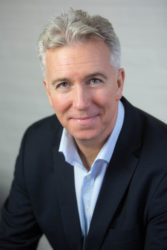
Dr Simon Targett
This month, and to mark the 250th anniversary of the Declaration of Independence, we welcomed Simon Targett to talk about the links between Richmond (and the local area), British America and the War of Independence.
Dr Simon Targett is chair of the Richmond Local History Society. He has given talks to the society on George Vancouver, on Robert Walpole and on Richmond and Mortlake’s part in the founding of America and the launching of the British Empire.
Simon is an English historian, lecturer and freelance journalist. He is a former associate editor of the Financial Times.
He co-authored the 2018 book New World, Inc.: The Making of America by England’s Merchant Adventurers and has written articles for our journal Richmond History on George Vancouver, on Robert Walpole and Richmond Park, and on the secrets that Sir Francis Drake revealed to Queen Elizabeth I in Richmond Palace on his return from circumnavigating the world.

The “Armada Portrait” of Elizabeth I (formerly attributed to George Gower), commemorating England’s defeat of the Spanish Armada
Richmond, the capital of Virginia, was named after our own Richmond by William Byrd, a wealthy plantation owner who had studied law in England and who was struck by the similarity between the bend in the James River as viewed from Libby Hill and the bend in Thames, as viewed from Richmond Hill.
But this is just one of many connections between Richmond (and Kew, Petersham, and Twickenham) and British America (up to 1776 and the American War of Independence). As Simon explained in his talk, the first connections date back to the 1580s, when Sir Francis Drake held secret talks with Queen Elizabeth I at Richmond Palace about the land he named in her honour near what is now San Francisco.
After that, the connections deepened, and Simon told about, among others, Matoaka (otherwise known as Pocahontas), Elihu Yale (after whom Yale University is named), Thomas Pownall (a former governor of Massachusetts), General William Howe (Commander-in-Chief of the British Army during the War of Independence) — as well as future presidents John Adams and Thomas Jefferson.